This is probably most visible in secondary packaging. Different case packers, different tray erectors, different ways of handling formats and changeovers. Operators are trained on one site, then “start from scratch” when they visit another. Engineering teams struggle to roll out improvements globally. And every new line becomes a custom project.
The question is simple: how do you move from “every factory its own way” to a scalable, standardised secondary packaging platform – without killing local flexibility?

What packaging functions to standardise
The goal is not to make every factory identical. The goal is to create a common backbone where it matters and allow variation where it creates value.
You typically want to standardise:
- Core machine families for case and tray packing
- Interfaces and layouts at end-of-line – infeed, outfeed, palletising connection
- HMI philosophy, safety concepts and basic operator workflows
- Data structures: how you define products, recipes, formats and KPIs
At the same time, you should keep flexibility for:
- Local product portfolios and customer requirements
- Case and tray sizes within defined ranges
- Choice of packaging materials and printing, driven by marketing and retailers
- The level of automation around each line (manual vs. automated palletising, buffering, etc.)
In other words: define a platform, not a prison.
Building blocks of a scalable secondary packaging line
A scalable end-of-line solution is easier to achieve when you think in modules, not one-off machines.
A typical platform for e.g. snacks, tortilla and bakery might include:
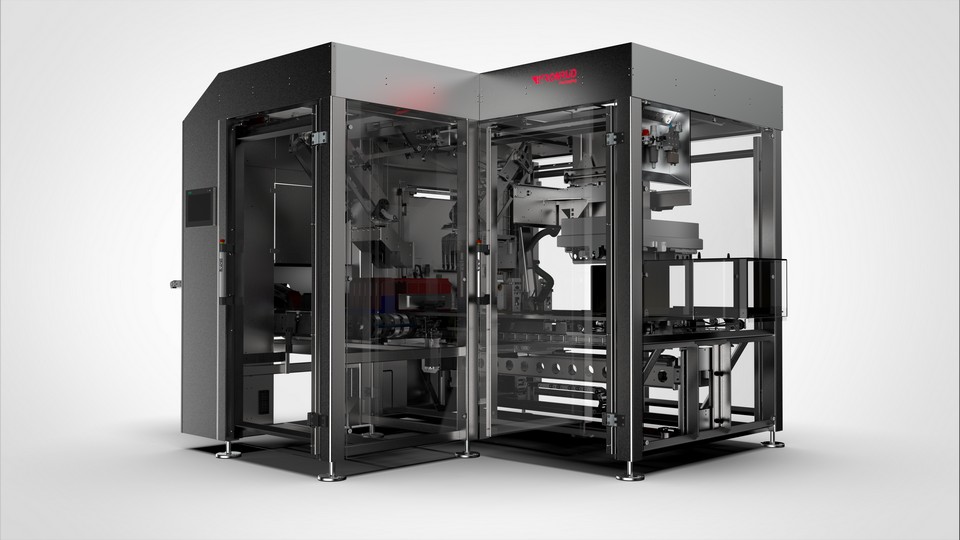
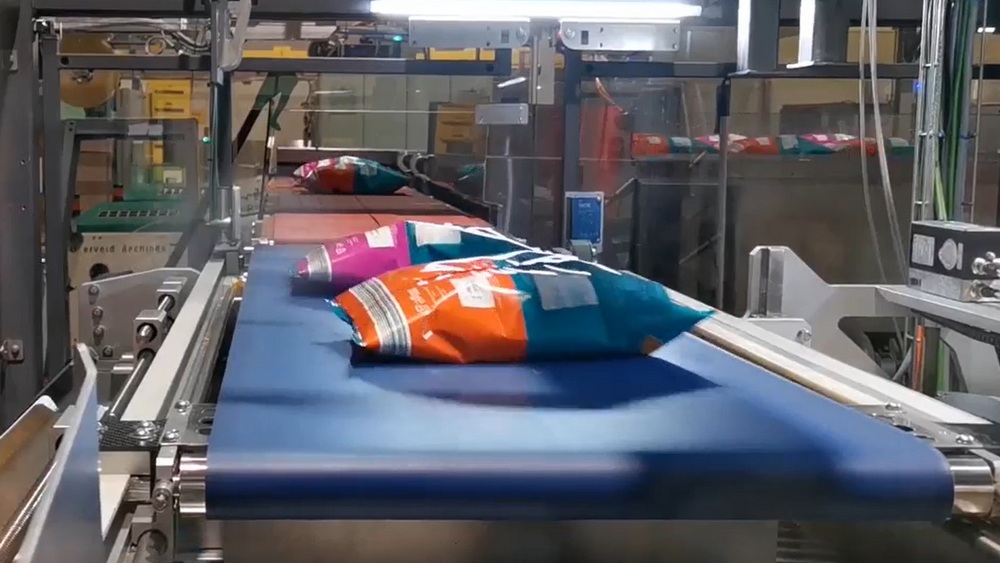
- One case packer family for different kinds of products using the same basic technology and HMI but scaled for different speeds and capacities. For example, compact machines for medium lines and high-capacity models for flagship factories.
- Case packers with automatic changeover and low total cost of ownership, used wherever retail-ready or display cases are needed.
- Support machines such as elevators to bring products to the right height and tray erectors to secure a consistent, ready-to-fill infeed for packing.
- Labelling and print & apply systems that use the same data structures, label layouts and integration principles across sites.
Once these modules are defined and proven on one site, they become your standard toolkit. New lines and new factories are built by combining known blocks, not reinventing the wheel.
More to read: Packaging Automation: New Automatic Wrap-around for Fast Changeovers
Digital tools turn standardisation
Standardising hardware is only half the story. The real leverage comes when you combine it with a shared digital platform.
A platform such as iNSIGHT can act as the digital “glue” between factories by providing common dashboards for OEE, downtime, changeover performance and waste. Shared alarm structures and root-cause coding make you able to compare like with like. Remote support and commissioning tools let central experts help local teams faster. And: online documentation, training and guided troubleshooting follow the machine, not the factory.
When every case packer, elevator and tray erector speaks the same digital language, you can benchmark sites, roll out best practices and train operators more efficiently. You move from “we think this line is slower” to “we know exactly where we lose performance – and we can see how the best factory does it”.
Investment, Opex and time-to-market
For top management, the case for standardisation is rarely about one machine – it is about the lifecycle economics of the whole network.
A scalable secondary packaging platform can:
- Reduce capex for new lines and new factories, because engineering and risk are lower
- Cut Opex through faster changeovers, higher uptime and lower spare-part complexity
- Shorten time-to-market for new products and formats, because recipes and packaging concepts can be cloned across sites
- Simplify competence management – operators and technicians can move more easily between factories
Over time, the accumulated effect is significant: your network behaves more like one large, learning factory, not ten separate plants.
Take a video tour: High-Performance Packaging Machines
How to organise a cross-site standardisation project
Successful companies treat this as a strategic programme, not a side task for a single project manager.
A few practical tips:
You should create a cross-functional core team with Operations, Engineering, Maintenance and Supply Chain represented. Next, choose a couple of pilot factories to prove the platform and collect lessons learned.
It is a smart move to involve a limited set of key OEM partners who are willing to think platform, not just project. Define clear governance: who owns the standards, who can approve exceptions and how changes are rolled out.
And an early communication of the goal is vital: To support local teams, not to centralise everything.
Standardising secondary packaging is not about making every factory identical. It is about giving each site a stronger, shared foundation so they can focus on what really differentiates them: product quality, customer service and speed to market.